
Coyotes: Coexisting with Wildlife
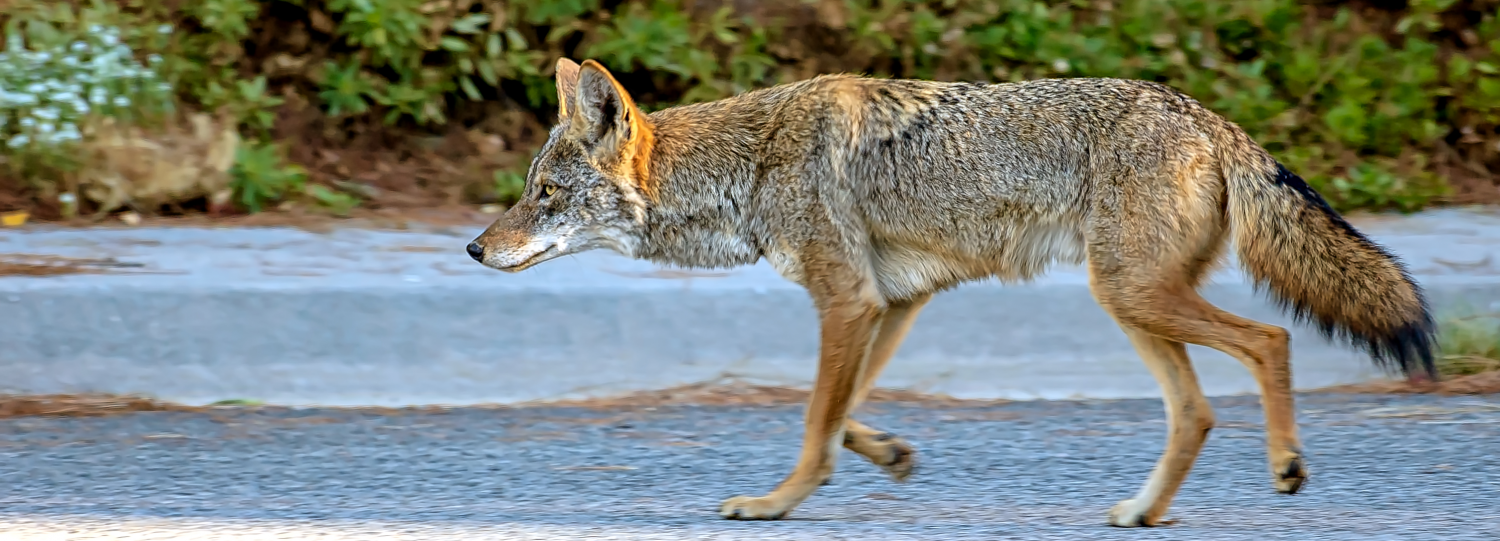 Coyotes generally avoid humans, even though we share much of the same space in San Diego County's urban and suburban areas. However, pet food, compost or trash can attract coyotes and create the impression that homes or buildings are easy feeding areas. Without the attraction of food, their visits will be brief and rare. But a coyote who finds food in one yard may learn to search for food in others.
What Attracts Coyotes to Urban and Residential Areas?
Food
Although coyotes are a valuable part of our ecosystem, you should never intentionally feed them. Providing coyotes with food will make them more comfortable approaching people, which is dangerous to the coyote’s well-being. Here are some other general rules to follow:
- Avoid feeding pets outside. If you must give them food outside, feed them only for a set time during the day (for no more than one hour) and remove the food bowl as soon as your pet has finished eating.
- When it is hot and dry outside, water can be as attractive as food, so remove water bowls set outside for pets and put watering cans away.
- If you compost, use enclosed bins and never compost meat or fish scraps.
- Good housekeeping, such as regularly raking areas around bird feeders, can also help discourage coyote activity near residences.
- Remove fallen fruit from the ground.
- Keep trash in high-quality containers with tight-fitting lids. Only place the cans curbside the morning of collection. If you leave them out overnight, they are more likely to be tipped and broken into.
Shelter
Coyotes are secretive animals, and studies have shown they can live near humans for a long time without ever being noticed. Such coyotes are coexisting with us peacefully and should be left alone.
In the spring, when coyotes give birth and begin to raise pups, they stay close to dens or burrows in which their pups are sheltered. During these times, they may become highly defensive and territorial — and challenge any other coyote or dog that comes close to their babies. People walking their dogs in parks and wooded areas may run into these situations and even be challenged by parent coyotes to back off. Fights are rare, but they most often happen when dogs are off leash. It’s important to recognize such incidents for what they are: defense of space, not random attacks. If you encounter a coyote when walking your pet, do NOT run away. Instead, haze the coyote with the techniques described below.
Pets
Pets may attract coyotes into certain neighborhoods. It is natural for coyotes to seek out small animals such as rabbits and small rodents for food. However, if outside, our pets may also be at risk. The best way to minimize risk to pets is to not leave them out unattended, especially at night.
People who feed community cats are often concerned coyotes might prey on the cats. Here are some general suggestions for keeping cats safe:
- Provide escape routes for cats. In treeless or open areas, put up “cat posts.” These can be wooden posts (four inches by four inches or corner posts) that stand out of the ground at least ten to twelve feet and can be climbed by cats, but not coyotes.
- Only feed cats during the day and at a set time, and pick up any leftovers immediately. Place feeding stations higher than a coyote can reach. The size of the station(s) can be customized to the size of the cat colony you feed, and the amount of food should be adjusted for the number of cats you feed. Elevated feeding stations mean safer cats, less mess and savings on cat food!
- Discourage coyotes seen on the property using the techniques described in San Diego Humane Society's Coyote Hazing Guidelines. Making the coyotes feel uncomfortable will encourage them to stay out of the area.
Although “attacks” on dogs are rare, coyotes will sometimes go after dogs when they feel that their territory is threatened. Here are some general suggestions for keeping dogs safe:
- Attacks on dogs generally occur during the coyote breeding season, which takes place from January through March. During this time, it is especially important not to leave dogs outside unattended and to keep them on leashes when in public areas.
- Most dog attacks occurring outside the coyote breeding season are probably caused by coyotes who have become too comfortable with humans, so it is critical to remove or secure attractants such as pet food and garbage from residential areas.
- It is normal for coyotes to be afraid of people. The best protection for your dogs is to always accompany them outdoors and to use a leash when walking them in a park.
Misconceptions of Pet Attacks
Some claim that diseased coyotes are to blame for pet attack incidents, and that removing such animals from the population is the answer. This is not the case. Most attacks on pets are caused by healthy, habituated coyotes
- Sick coyotes are usually not more aggressive than healthy coyotes, unless they have rabies.
- There is no evidence that coyotes with mange are more likely to attack people or pets. Coyotes with mange can simply appear threatening because they are weak, strange looking (due to hair loss) and may be found resting in suburban areas during the daytime.
- Attacks on dogs are likely caused by coyotes who have lost their fear of people and have become habituated. This happens when coyotes are being fed in residential areas (either intentionally or unintentionally through pet food that’s left outside, garbage, etc.) and are not hazed by people.
- A 10-year study of over 300 coyotes in the greater Chicago metropolitan area revealed only two coyotes had attacked pets. Necropsies done on these coyotes showed that they had been eating pet food but were otherwise healthy.
Protecting Your Yard
To further protect cats and dogs, fencing can be used to keep coyotes out of residential yards. Fences must be at least 8 feet tall and extend underground at least 12 inches. Devices such as the Coyote Roller (www.coyoteroller.com) “roll off” coyotes that try to scramble over the fence and can enhance the effectiveness of a fence. Coyote rollers are meant to literally “roll off’’ any coyotes who attempt to scramble over the fence and will be equally effective in keeping dogs from jumping out of fenced yards. Do-it-yourself options include adding PVC piping or chicken wire to the top of your fence to prevent coyotes from jumping over and retrofitting a mesh apron to the bottom of the fence (extending over 12 inches out, secured with landscaping staples) to keep coyotes from digging under.
As coyotes have expanded their range across North America, encounters with people have increased. These encounters sometimes alarm people who fear for the safety of their pets and children. To address this, communities may feel they need to pay for widescale programs to remove coyotes from the population. These killing programs don’t work and are inhumane. Better solutions exist.1
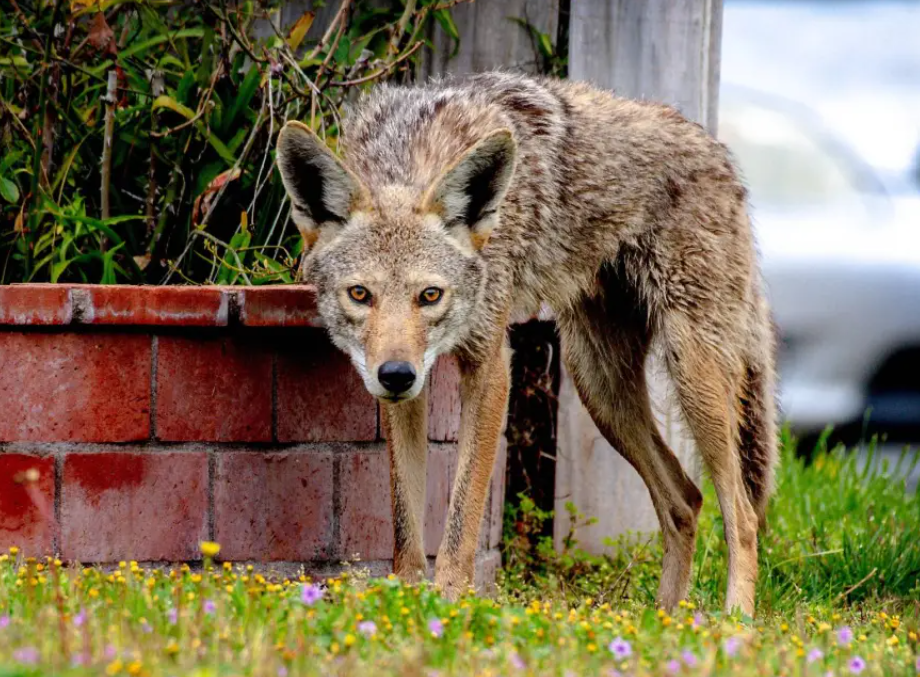
Why Don't Coyote Killing Programs Work?
They Are Ineffective
- It is extremely difficult to ensure that the problem-causing coyote will be the animal located and killed.
- Coyotes removed from an area will quickly be replaced by others. Coyote pairs live in territories together, which leaves single coyotes (“floaters”) constantly looking for new places to call home.
- If the items attracting coyotes to a neighborhood are not removed (e.g. pet food, garbage, etc.), new coyotes in the area will quickly discover the food sources and once again return to the neighborhood.
They Will Not Reduce Populations
- Research suggests that when aggressively controlled, coyotes can increase their numbers by breeding at an earlier age, having larger litters and producing a higher survival rate among young. This allows coyote populations to quickly bounce back, even when as much as 70% of them are removed.
- It is nearly impossible to completely eradicate coyotes from an area. Despite bounties and large-scale efforts to kill coyotes over the last 100 years, coyotes have in fact expanded their range throughout the U.S. and Canada tremendously. One study even found that killing 75% of a coyote population every year for 50 years would still not
- eliminate the population.
Removal is Costly
- Coyotes are very intelligent animals and are difficult to catch. Even a very skilled trapper or sharpshooter, at a hefty price tag, will need many hours to catch a targeted coyote.
Trapping is Inhumane
- The most common devices used to capture coyotes are leg hold traps and neck snares. Both can cause severe injuries, pain and suffering.
- Pets become unintended victims of traps set for coyotes. An informal search of media reports suggests thousands of unintended incidents have occurred, causing heartbreak for the families affected.
- Wildlife other than coyotes are also caught — and many sustain injuries so severe that they die or must be euthanized.2
What is Proven to Work?
Learning about coyotes and using humane hazing techniques is the best way to handle and prevent conflicts with coyotes — and we’re here to provide you with the information you need! This type of program is already working in a number of communities and can help us respectfully coexist with the animals we share our home with.
Education
Food Attractants
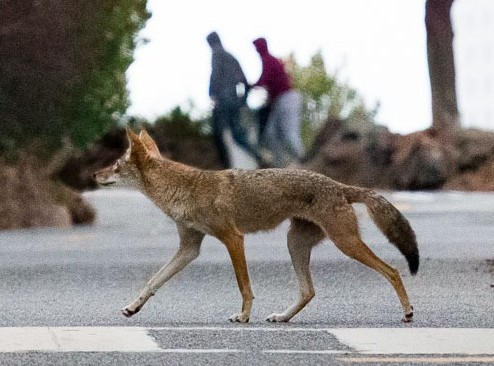
- Some well-intentioned community members may think feeding coyotes is helping, but it’s actually putting the coyote and other animals in the community at risk. Never feed coyotes or encourage them to visit your property.
- Indirect sources of food (pet food, composted meat scraps and trash) can also be highly attractive to coyotes. These items must always be thrown away in a secure bin or properly stored in a sealed container.
Pets
- The best way to protect pets and prevent coyote conflicts with our animals is to keep cats indoors and not leave dogs outside unattended.
- Dogs should always be kept on leash in neighborhoods, open spaces and natural areas.
Educational Campaigns
- Teach children how to recognize a coyote and what to do if they encounter one. Children should never run from a coyote — instead they should stand up straight, wave their arms up in the air and be as loud as possible while moving slowly toward the nearest adults.
- By learning about coyotes and their behavior, common myths and misunderstandings about this species can be explained, reducing fear and helping us coexist with these animals.
Hazing
When coyotes do not run away when approached or charged by a human, they have probably become habituated, or lost their fear of humans. They may even approach people, looking for food handouts. These bold coyotes should not be tolerated or encouraged but instead given the message that they should fear approaching people or residences.
What is hazing?
- Hazing is an activity or series of activities that help reintroduce the natural fear of humans into coyotes. It can help maintain a coyote's fear of humans and deter them from neighborhood spaces such as backyards and play spaces.
- It includes simple actions such as yelling and waving your arms, spraying the coyote with water, using noise makers like blow horns and whistles and throwing objects such as sticks or toy balls in the direction of the coyote.
- Communities including Denver, Colorado, Vancouver, British Columbia, and Los Angeles, California have successfully used hazing to reverse undesirable behavior in their coyote populations.
Hazing Techniques
- For many coyotes, making yourself loud (by yelling or using homemade noisemakers) and large (by standing tall and waving your arms) is all that is needed to scare them away.
- More aggressive methods (including banging pots and pans, spraying a hose or using noisemakers like air horns) may be necessary for some coyotes. Groups of volunteers can even be recruited and taught to haze in problem areas.
- It is important to continue hazing until the coyote completely leaves the area. Using a variety of hazing techniques is also helpful to prevent habituation.3
The bottom line is that killing is not a solution for managing conflicts between people and coyotes. A combination of education and hazing can be more effective. By “educating” resident coyotes through hazing methods, we can leave coyotes in place who know and abide by the “rules” of living close to people. Coyotes are here to stay, and they are our built-in rodent control — it’s up to us to find ways to coexist with them. Read more about coyote behavior and hazing from the San Diego Humane Society.